What to Eat While Backpacking: A Simple Guide to Meals + Snacks
Backpacking asks a lot from your body. You’re hiking for hours, carrying extra weight, climbing elevation, dealing with heat, cold, or altitude, and then asking your body to recover overnight so you can do it all again the next day.
That means food on trail isn’t just about convenience, it’s fuel.
One of the biggest mistakes I see newer backpackers make is under-packing food because they assume they’ll eat similarly to how they do at home. In reality, sustained movement + a heavy pack + changing conditions can significantly increase your energy needs, and not eating enough can leave you feeling depleted, shaky, irritable, weak, or straight-up miserable halfway through a climb.
If you’ve ever suddenly felt like every uphill step was a personal attack… chances are you needed a snack.
Trail food also doesn’t need to look like your day-to-day diet at home. Backpacking is one of those times where calorie density, convenience, and foods you’ll actually want to eat matter a lot more than perfection.
What Makes Good Backpacking Fuel?
The best backpacking foods tend to check a few important boxes: lightweight, calorie-dense, easy to prep, packable, and appetizing enough that you’ll actually eat them when your appetite inevitably gets weird at altitude.
Here’s a simple breakdown:
Carbs = Quick Energy
Your body relies heavily on carbohydrates during sustained endurance activity, which makes them one of the most important things to pack. So, think:
instant oatmeal (I love the Purely Elizabeth Protein or even Quaker Oats Protein)
tortillas
bagels
crackers
dried fruit (Solely dried Mango is my new go-to)
granola
instant rice
ramen (esp if it’s packed with protein like Immi or even Momofuku)
energy chews (Clif Blok Chews are my faves)
snack bars
Quick carbs are especially helpful during active hiking days when you need energy fast without stopping for a full meal.
Fat = Long-Lasting Fuel
Fat is your friend in the backcountry. Since fat packs more calories per gram than carbs or protein, it’s an efficient way to carry more fuel without adding a ton of weight to your pack.
Think:
peanut butter or almond butter packets
trail mix
nuts
cheese
coconut chips
olives (Don’t sleep on the packs from Trader Joe’s)
nut-based bars
Adding fats to meals can also help you stay fuller longer.
Protein = Recovery + Staying Fuller Longer
I mentioned protein a little bit earlier, but it really helps support muscle recovery, especially if you’re hiking multiple days in a row. So, whenever you can work it in, make sure you do. In this case, think:
jerky (Chomps, for the win)
tuna or salmon packets
protein bars
dehydrated beans
freeze-dried meals with decent protein
protein oatmeal packets
That said, backpacking nutrition doesn’t need to be hyper-optimized. The goal is balance—not meal prep perfection.
Freeze-Dried Meals Are Worth It
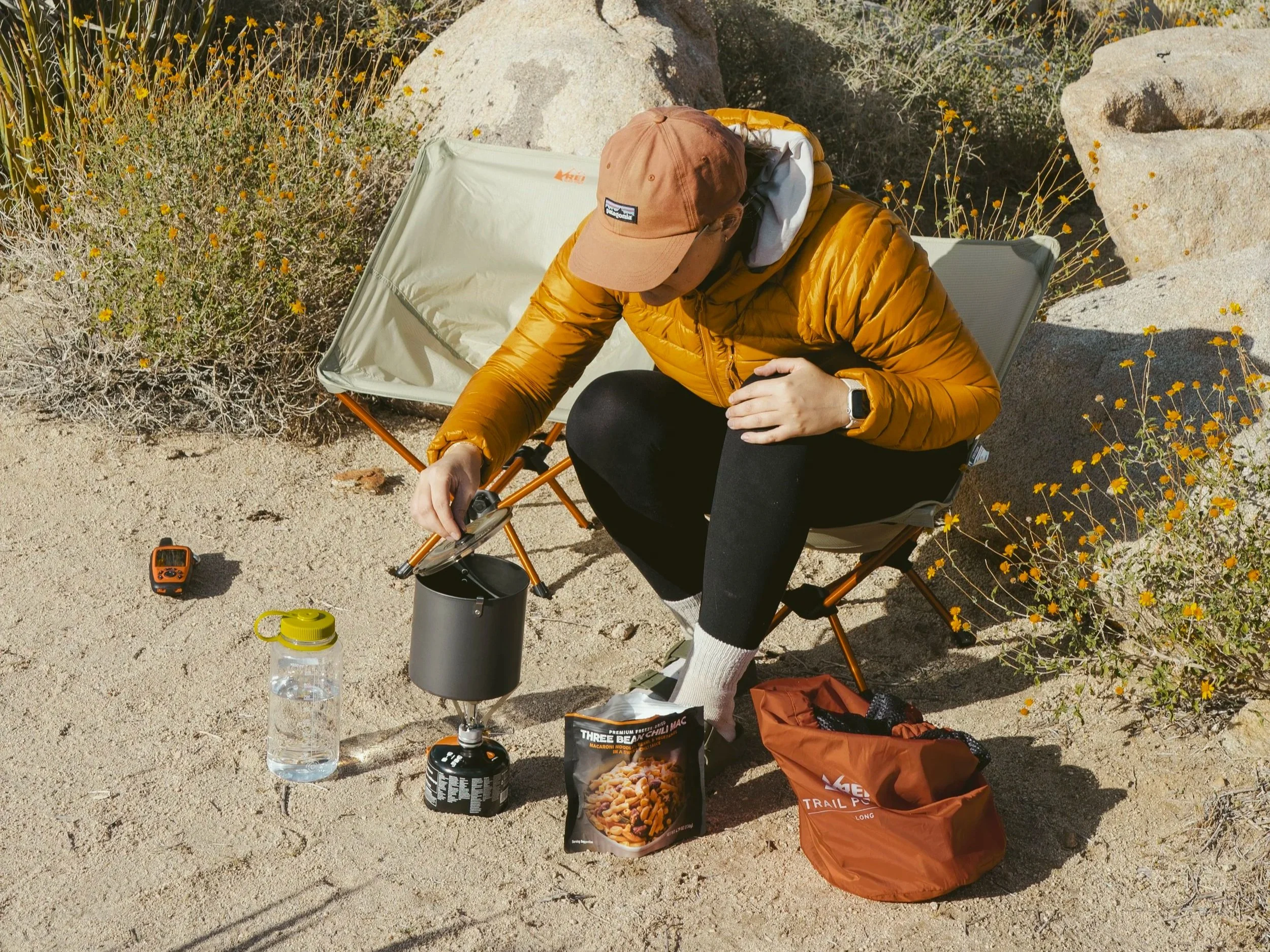
If you’re newer to backpacking, freeze-dried meals can be one of the easiest ways to simplify your food planning.
They’re lightweight, easy to pack, quick to make, and honestly? After hiking all day, having something warm and easy waiting for you at camp is a massive morale boost.
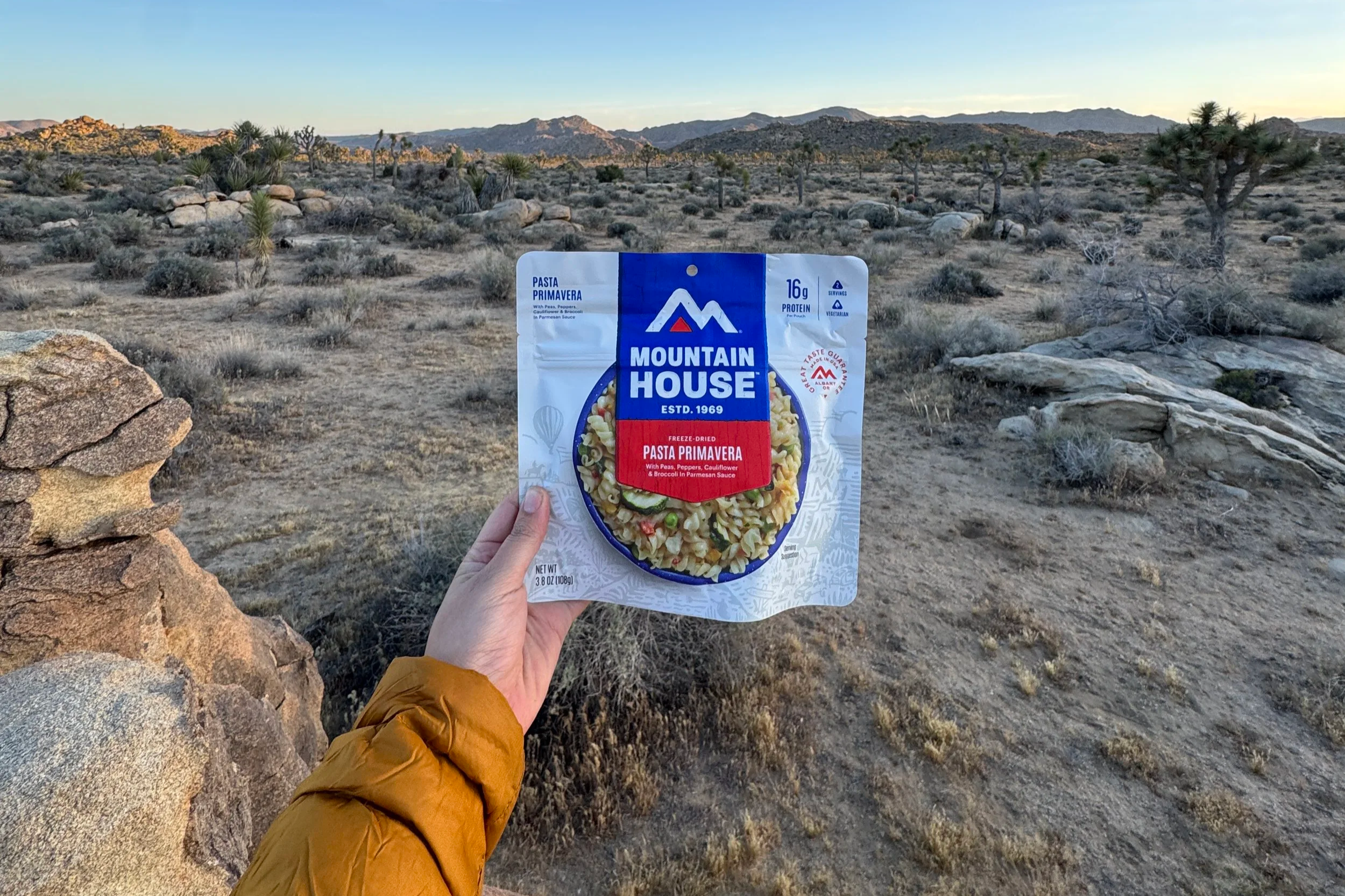
I’ve tested quite a few over the years, and Mountain House is still one of my personal go-tos because they’re reliable, easy to prep, and actually taste good after a long day outside.
Some of my personal favorites:
Pasta Primavera (lighter but still satisfying)
Mac & Cheese (peak comfort food energy)
Chicken & Mashed Potatoes (super underrated and surprisingly versatile)
Biscuits & Gravy (one of my favorite backpacking breakfasts)
Granola with Milk & Blueberries (great if you want a quick no-cook breakfast)
Desserts, because morale food absolutely counts
*Affiliate Links
Tips to Stay Fueled on Trail:
Eat Before You Feel Hungry
One of the most common mistakes I see? Waiting until you’re starving to eat. If you wait until you feel depleted, you’re already behind. Instead, aim to snack consistently throughout the day, especially on bigger mileage or elevation days.
Keep Snacks Easy to Reach
If your food is buried at the bottom of your pack, you probably won’t eat enough.
I always keep easy snacks somewhere accessible like:
hip belt pockets
shoulder strap pockets
outer mesh pockets
The easier it is to grab, the more likely you are to actually fuel consistently.
PRO TIP: I like to keep little appetite and energy boosters—like sour candies, Nerds Clusters or Jolly Ranchers—in my fanny pack or somewhere easy to reach throughout the day. Sometimes, when your appetite is low or the miles are starting to feel extra long, a quick hit of something flavorful can be enough to perk you up and keep you moving. It doesn’t have to be candy specifically, but if you have a go-to snack or little morale booster that helps motivate you on trail, keep it close at hand.
Bring Foods You Actually Like
This sounds obvious, but I see people pack food based entirely on recommendations instead of personal preference all the time. Before I started backpacking more regularly, I always carried chocolatey protein bars on hikes because I thought that was what I was supposed to eat outdoors. But inevitably, a few miles in, hot, sweaty, and breathing hard, the idea of choking down a sticky chocolate bar that tasted like cardboard was the absolute last thing I wanted.
And yet… I’d force myself to eat it anyway just to get something in my system.
Eventually, I realized what I actually craved in those moments was food that genuinely sounded appetizing—tart dried fruit, sour candy, saltier snacks, or lighter jerky flavors that didn’t feel so heavy.
The lesson? Leave behind the preconceived notions of what you think you’re supposed to pack. Trail food is deeply personal, and the best snacks are the ones you’ll actually want to eat when your body needs fuel most.
Trail appetite can also get kind of weird—especially at altitude—so bringing familiar foods you genuinely enjoy makes a huge difference. I love sea salt and vinegar chips, and I know, no matter what, they will always hit.
This is also why I keep meals I know I’ll actually look forward to, whether that’s a Mountain House Mac & Cheese waiting at camp or salty snacks I’ll happily crush mid-hike.
Don’t Skip Electrolytes
Especially if you’re hiking in heat, dry climates, or tackling long days.
Hydration isn’t just about water! You’re also losing electrolytes through sweat, which can leave you feeling sluggish, crampy, or just plain awful. I always recommend packing at least one or two of the following:
Common Backpacking Nutrition Mistakes:
Underpacking Food
You will probably eat more than you think. Especially on bigger effort days.
Packing Only “Healthy” Low-Calorie Snacks
Backpacking is not the time to fear calories. Your body needs fuel.
Only Bringing Sweet Snacks
At some point, your body will absolutely start craving salt. Trust me.
Trying Brand New Foods on Trail
Backcountry stomach drama? Nooo thank you. Test foods ahead of time (esp. spicy stuff) whenever possible.
Overpacking Complicated Meals
If it takes 14 steps, three pots, and chef-level motivation… you probably won’t want to make it. Simple usually wins.
Dialing in your backpacking food takes time. What works for one person might not work for someone else, and honestly, part of the process is figuring it out as you go.
But if there’s one thing I’d emphasize, it’s this: eat more than you think you need, and bring food you’re actually excited about. It makes every mile feel better.


