Cottonwood Lakes Backpacking Guide
The Trail
Distance
~12.86 mi
Elevation Gain
~1,411 ft
Best time to visit
Late May-September
Dog Friendly?
Yes, on leash or under voice command
Permit Required?
Yes, Inyo National Forest, Cottonwood Lakes
Difficulty
Moderate-Hard
There are some trails that stick with you long after you’ve hiked them.
Cottonwood Lakes was one of those places for me. Mark and I day hiked this trail years ago, and even though I remembered loving it, there was something really special about getting to come back and actually spend the night this time — especially with Shadow in tow.
We left Los Angeles early Friday morning, made our way up Highway 395, and stopped in Lone Pine for a few last-minute sundries before committing to the long, winding, slightly terrifying drive up Horseshoe Meadow Road. If you’ve ever driven this road, you know. It climbs fast, switchbacks dramatically up the side of the mountain, and somehow makes you feel like you’re already in the adventure before you’ve even parked the car.
By the time you reach the Cottonwood Lakes Trailhead, you’re already starting above 10,000 feet — roughly 10,070 feet depending on the map you’re using — which is both incredible and humbling. Incredible because you get access to true High Sierra scenery without thousands and thousands of feet of climbing. Humbling because your lungs absolutely know you came from sea level that morning.
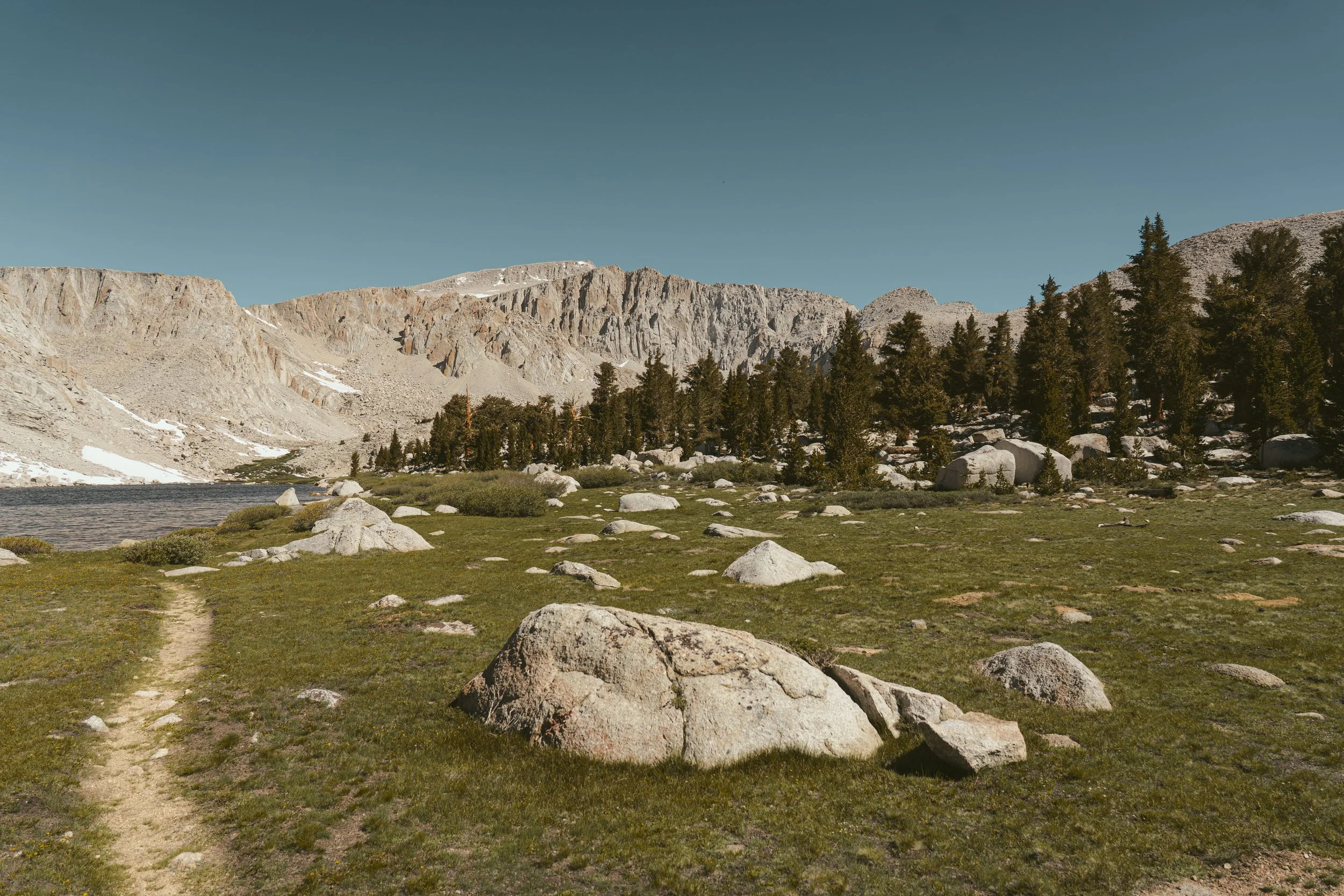
The beginning of the trail is surprisingly cruisey. It rolls gently through open forest and meadow, with a few ups and downs that somehow felt a little more like all uphill on the way back. There are a couple of easy water crossings early on, and the trail gradually opens up into that classic Eastern Sierra landscape: granite, meadow, creek, and big blue skies.
Eventually, you reach the junction for New Army Pass and Cottonwood Lakes. We took the Cottonwood Lakes Trail toward the numbered lakes, though both routes access the larger basin in different ways. New Army Pass takes you toward Long Lake and High Lake before climbing toward the pass, while the Cottonwood Lakes Trail brings you toward the numbered Cottonwood Lakes below Old Army Pass.
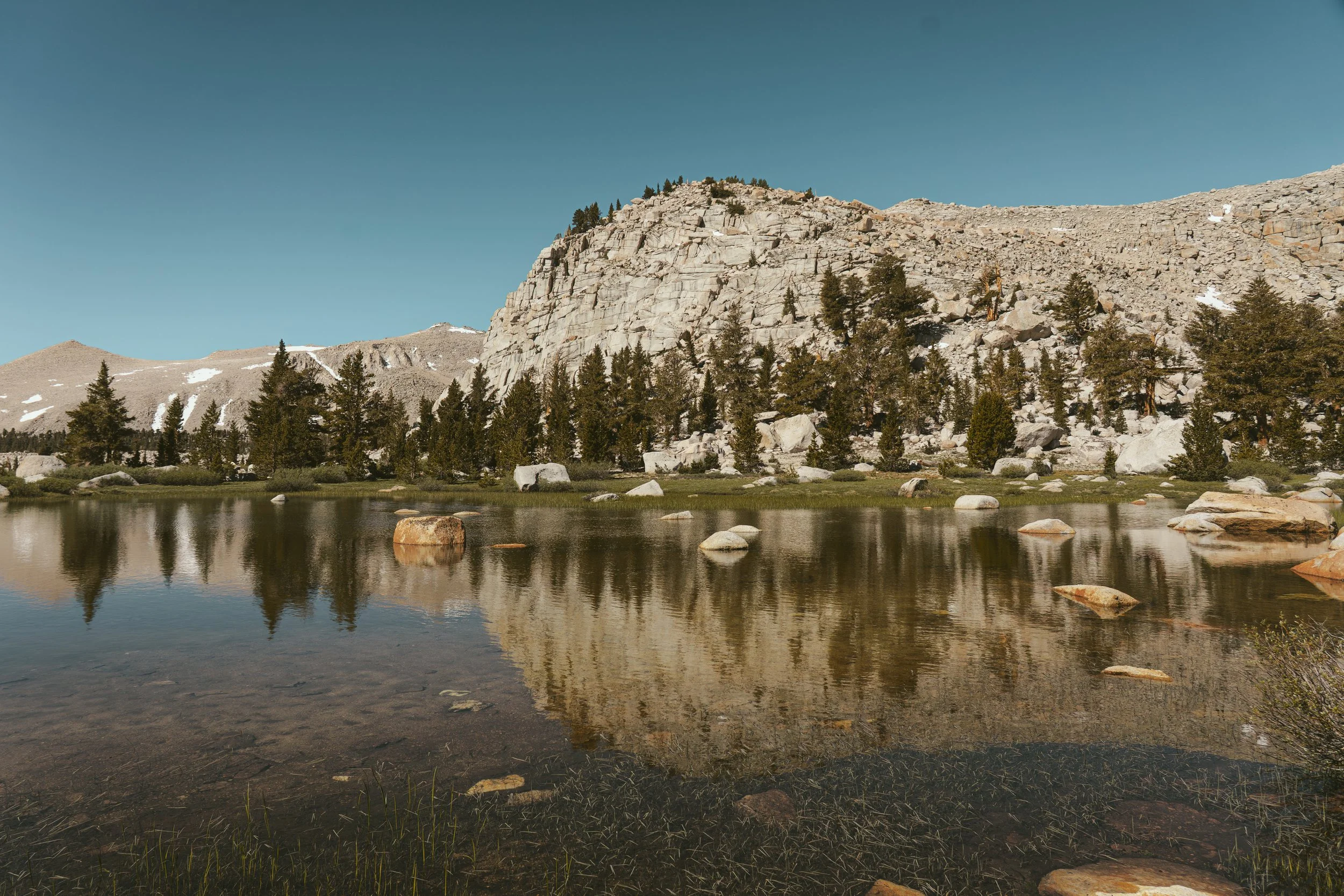
Route Note: Cottonwood Lakes vs. New Army Pass
If your goal is to simply camp in the Cottonwood Lakes Basin, the main Cottonwood Lakes Trail is the most direct route to the numbered lakes, and the trail we took. If your goal is Mount Langley via New Army Pass, many backpackers continue toward Long Lake or High Lake instead.
If your goal is Mount Langley via Old Army Pass, Lakes 3, 4, and 5 can all make great basecamp options depending on conditions, wind, how much exposure you want, and how far you feel like carrying your pack.
We followed the trail up into the basin and then cut over cross-country toward Lake 3. This ended up being a great choice for us. Lake 3 had a lot of flat, private campsite options tucked away from the main flow of traffic, and while I wish we had more energy to site-hunt a little longer, we were pretty beat by the time we arrived.
This is the part where the elevation really reminded us who was in charge. On paper, this hike is moderate. In real life, when you drive up from Los Angeles and start hiking above 10,000 feet with a full pack, it definitely feels like a little more than moderate.
Where to Camp at Cottonwood Lakes
There are a lot of great camping options throughout the basin, but not every lake is equal in terms of flat spots, privacy, wind exposure, or proximity to Mount Langley routes.
Lake 3 is a great option if you want a scenic, slightly more tucked-away basecamp with access to Old Army Pass. This is where we camped, and we found plenty of flat, private sites.
Lakes 4 and 5 are also popular options, especially if you’re hoping to summit Mount Langley via Old Army Pass. They feel a little more alpine and dramatic, but they can also be more exposed to weather and wind.
Long Lake and High Lake make more sense if you’re planning to summit Mount Langley via New Army Pass.
Muir Lake or Hidden Lake can be good options if your priority is seclusion, though they’re less direct if you’re trying to use camp as a base for Langley.
As always, camp on durable surfaces, avoid fragile meadow areas, and choose existing sites at least 100 feet from lakes, streams, and trails.
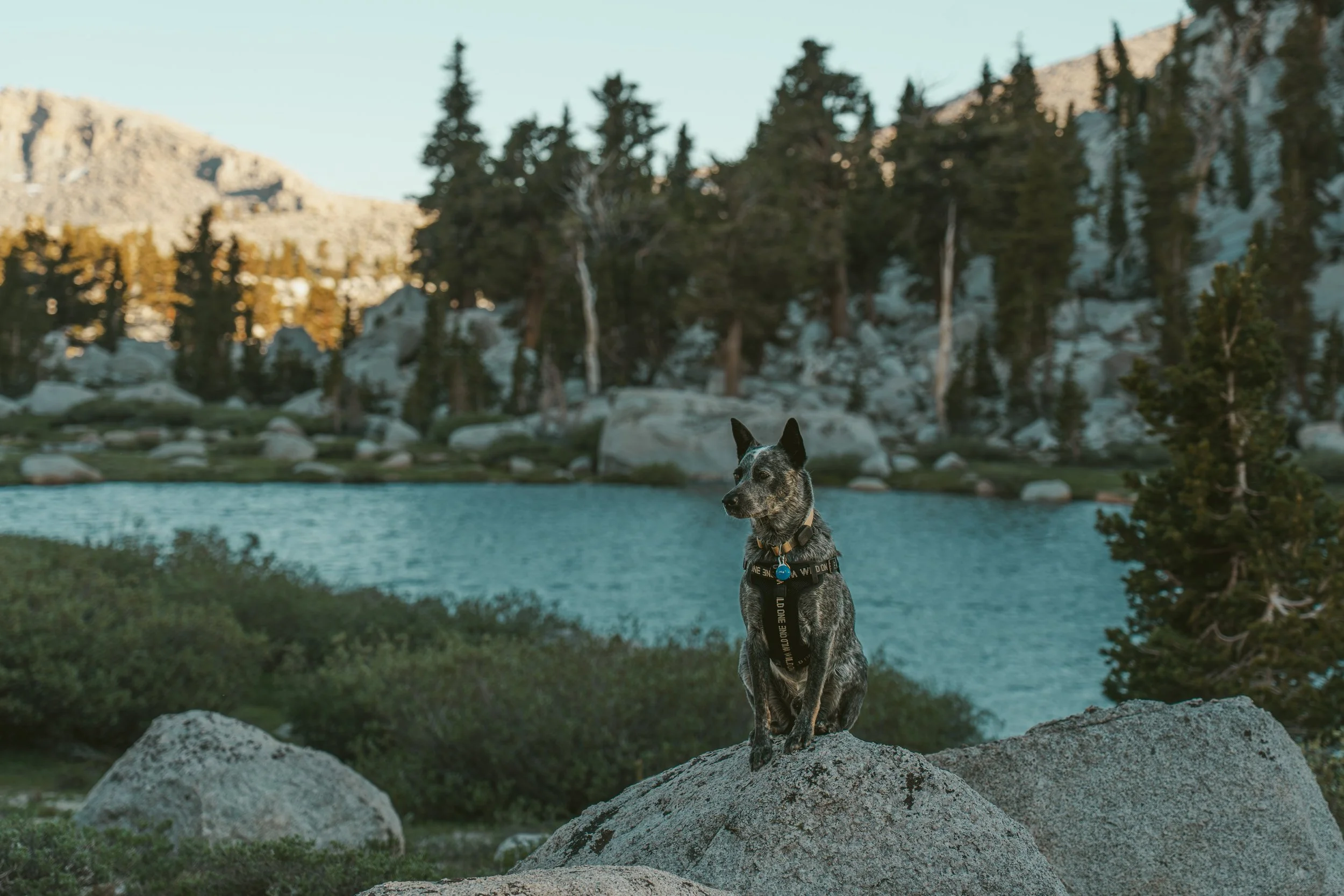
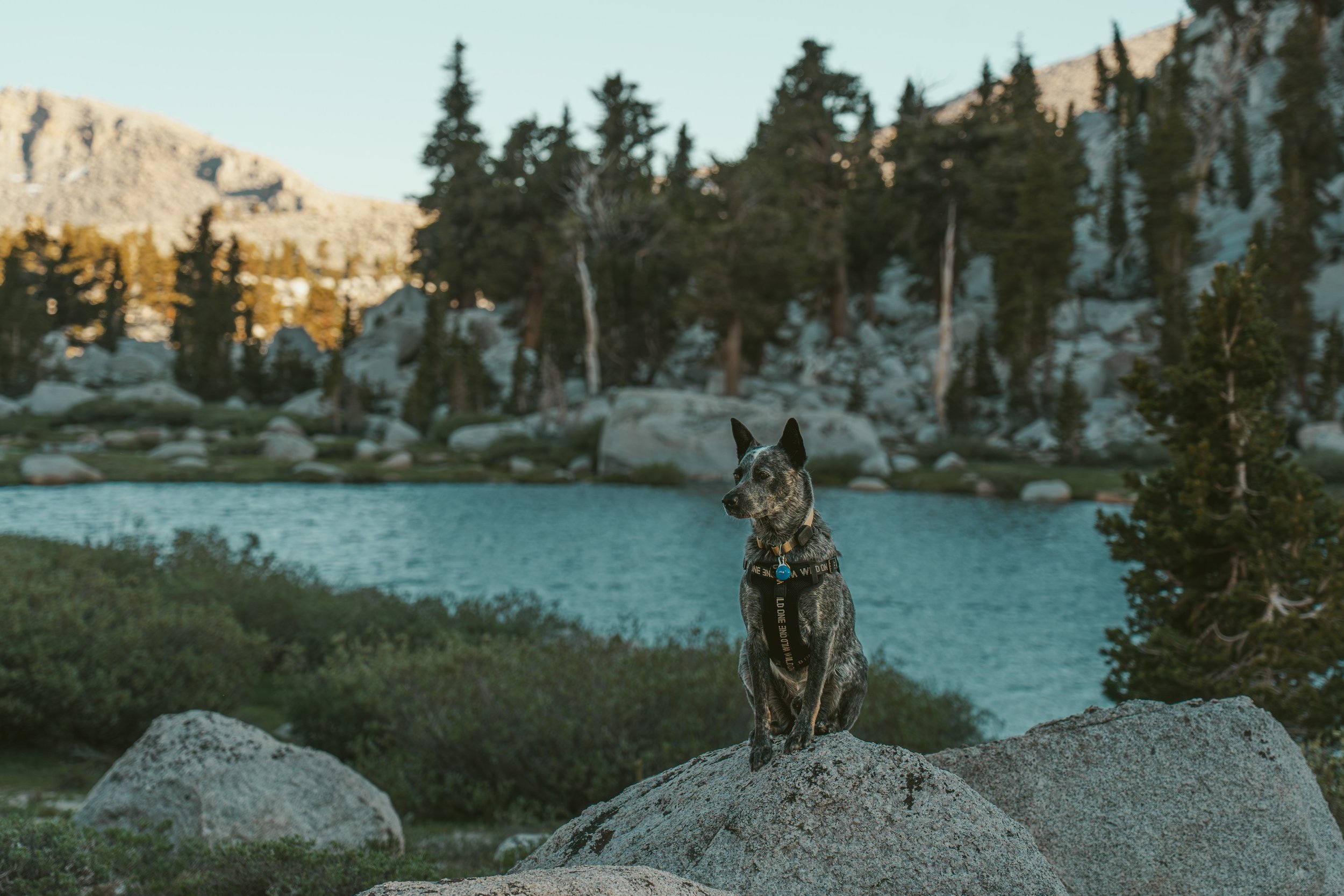
One of the sweetest surprises of the trip was meeting a father-daughter duo camping nearby. They were so kind and immediately took to Shadow, who is usually not the most social dog when it comes to new people. But for whatever reason, he decided they were friends.
And watching him play with the daughter, and honestly the dad, too, was one of my favorite parts of the whole trip.
We usually keep Shadow on leash on this trail because there is a lot of horse traffic, and the last thing I want is a cattle dog making questionable choices around pack animals. But once we were settled at camp, away from the main trail, we let him roam a little. He stays close, has excellent recall, and seemed so happy to just be a dog in the mountains.
It’s hard to explain how good it feels to see your dog that happy and free. Like, yes, the lake was beautiful. The granite peaks were beautiful. The sunset was beautiful. But Shadow exploring around camp, making new friends, and living his best little backcountry life? That was the highlight.
Backpacking with a Dog: What Worked Better This Time
This was Shadow’s second backpacking trip, and we made a few gear changes after learning some lessons the hard way on his first one.
This time, we packed:
A small dog jacket for nighttime
A Rumpl blanket that could double as a little cape
An extra closed-cell foam sleeping pad that I cut down just for him
That setup worked so much better. He stayed warmer, seemed more comfortable, and actually fell asleep and stayed asleep, which meant a little less stress for us, although it didn’t mean much better sleep for us.
Cottonwood Lakes is also one of those areas where mosquitoes can be pretty bad, especially with all the lakes, creeks, and marshy sections throughout the basin. We got lucky with a light breeze, so they never became unbearable, but I would still come prepared with bug spray, a head net, and layers you can use as a mosquito shield.
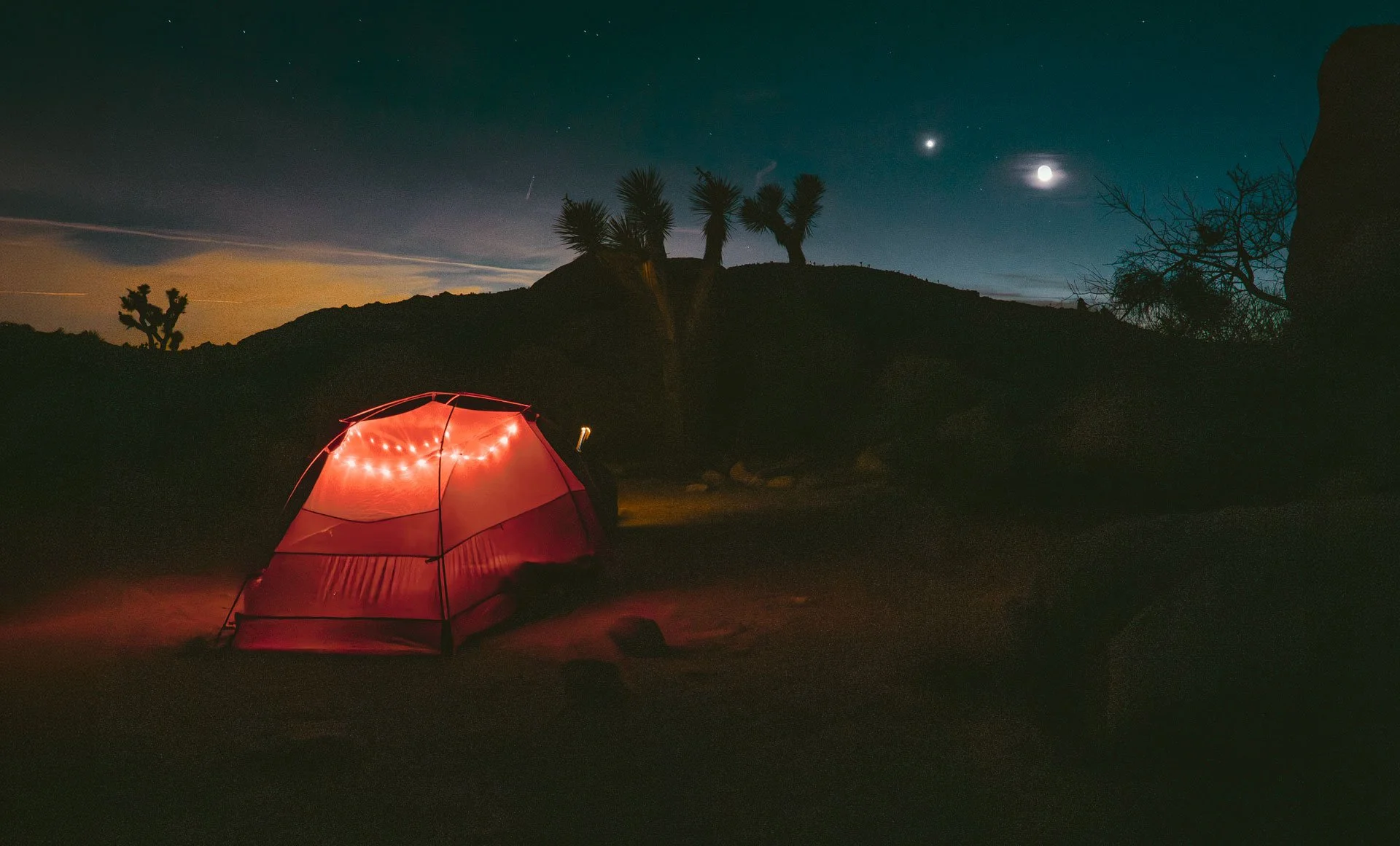
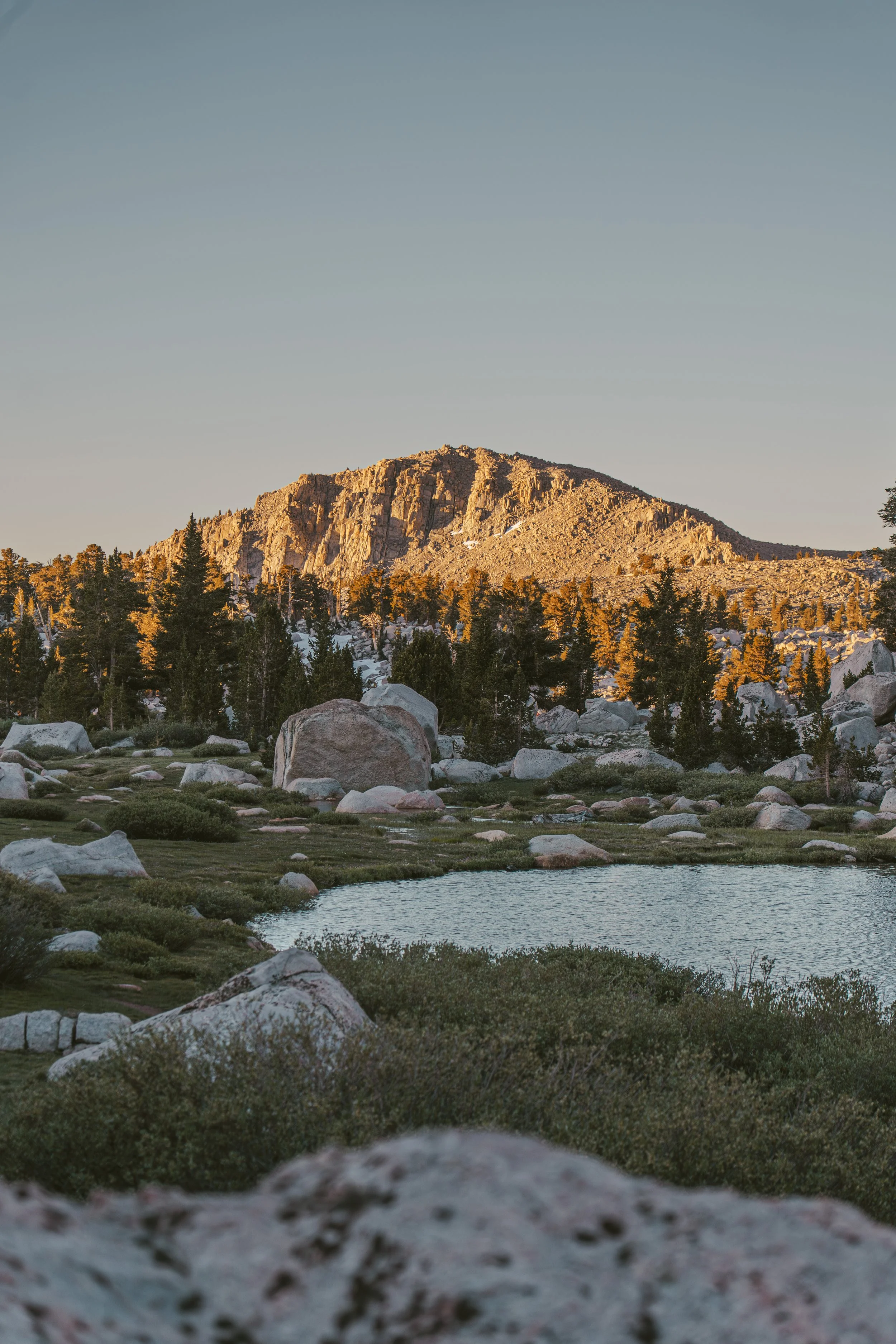
After setting up camp, we kept the rest of the evening simple: hang out by the lake, make dinner, watch the light move across the basin, and eventually crawl into the tent.
No big agenda. No summit push. No need to make the trip more impressive than it was.
Just us, our dog, a hot meal, and one of those High Sierra sunsets that makes everything feel quiet in the best possible way.
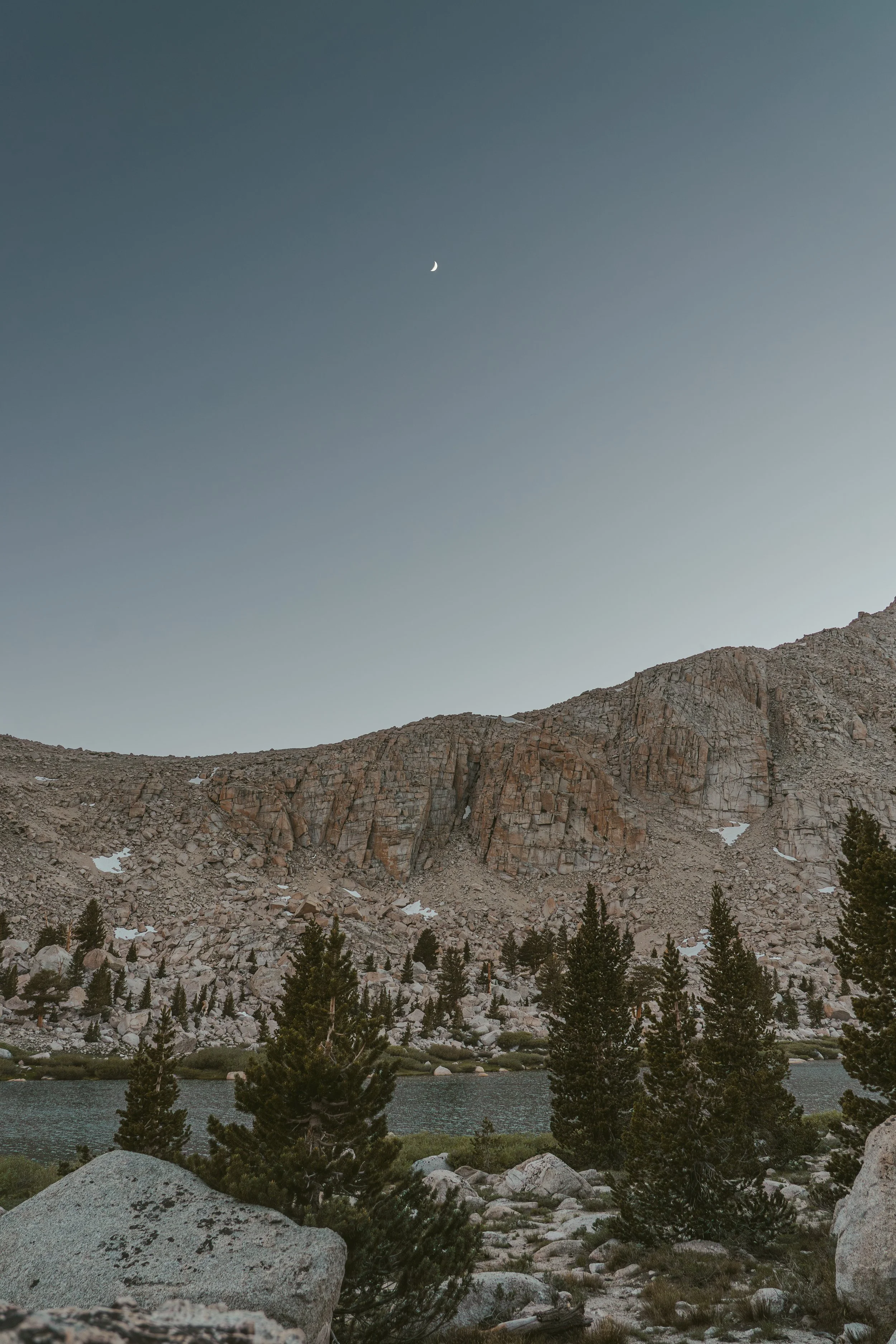
A Note on Mount Langley…
Cottonwood Lakes is also a popular approach for Mount Langley, one of California’s 14ers. The summit sits at 14,026 feet, and while it’s often described as one of the more approachable California 14ers, that does not mean it’s easy.
From the Cottonwood Lakes Basin, many hikers climb Langley via Old Army Pass or New Army Pass. Lake 3, Lake 4, and Lake 5 can all work well as basecamp options for an Old Army Pass attempt, while Long Lake or High Lake are better positioned for New Army Pass.
Originally, I had loosely considered trying to summit Langley on this trip, but with it being early season, high elevation, and Shadow’s second backpacking trip (dogs aren’t allowed up that way, as it passes into National Park territory), I’m really glad we kept things mellow. Sometimes the best version of a trip is the one where you don’t try to squeeze every possible objective into it.
The next morning, we woke up slowly, made coffee, and chatted with our neighbors while Shadow had one more big play session. It was one of those mornings where nobody was in a hurry to leave, even though eventually, of course, you have to start packing up.
For the hike out, we decided to take the lakeside trail back toward the meadow and loop through a slightly different section of the basin before reconnecting with the Cottonwood Lakes Trail. It gave us a new view of the area and made the return feel a little less like simply retracing our steps.
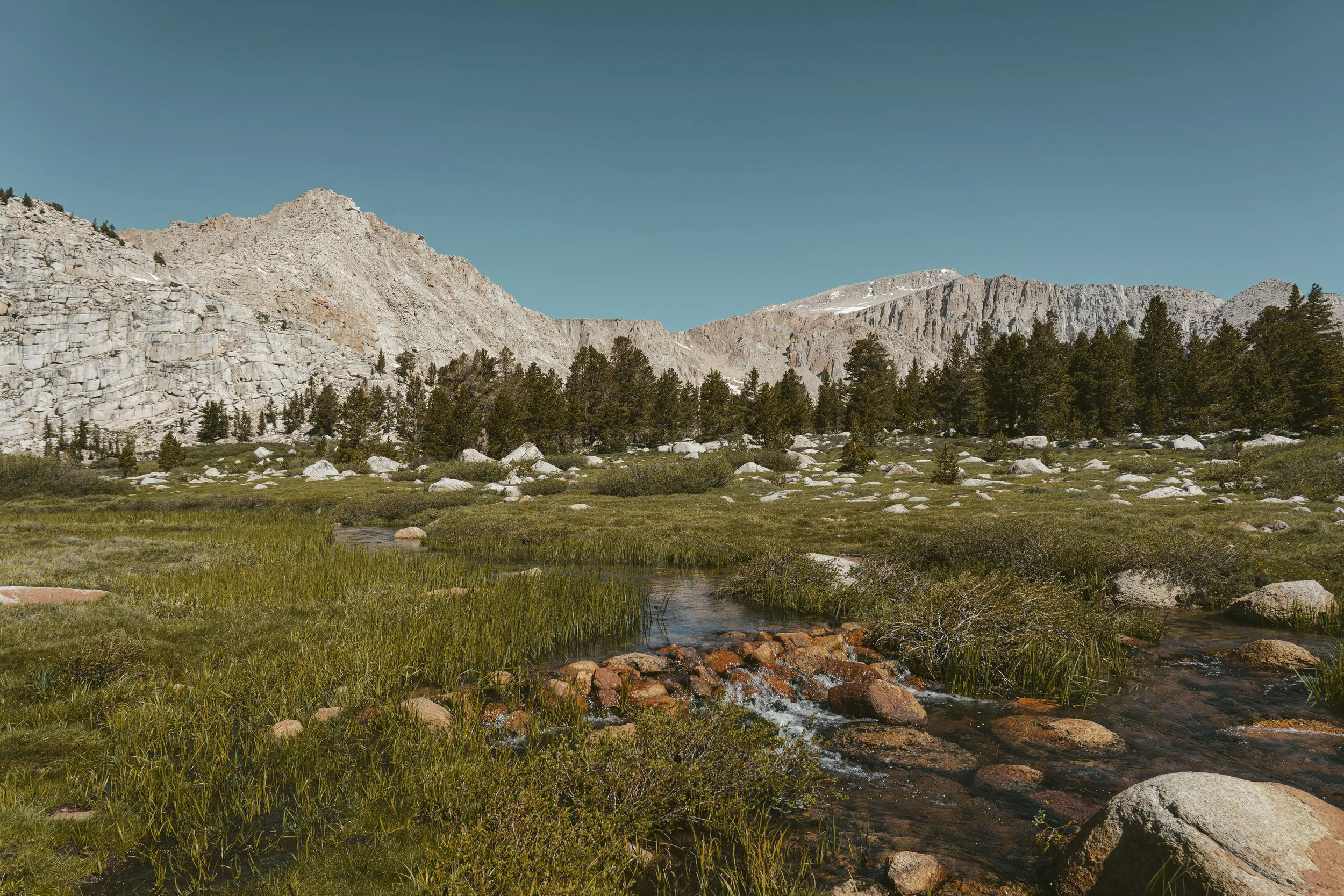
Eventually, the alpine lakes gave way to meadow, then forest, then the familiar trailhead bustle of hikers, backpackers, horses, and people sorting gear out of dusty cars.
Cottonwood Lakes is one of those places that feels both accessible and completely wild. The mileage is manageable, the trail is straightforward, and the scenery is unreal almost immediately… but the altitude keeps you honest.
And coming back years later, this time with Mark and Shadow, reminded me that you can return to the same place and have it feel entirely new.
Same trail. Same mountains. Different season of life. And this time, one very happy dog.