What I Pack Backpacking With My Dog
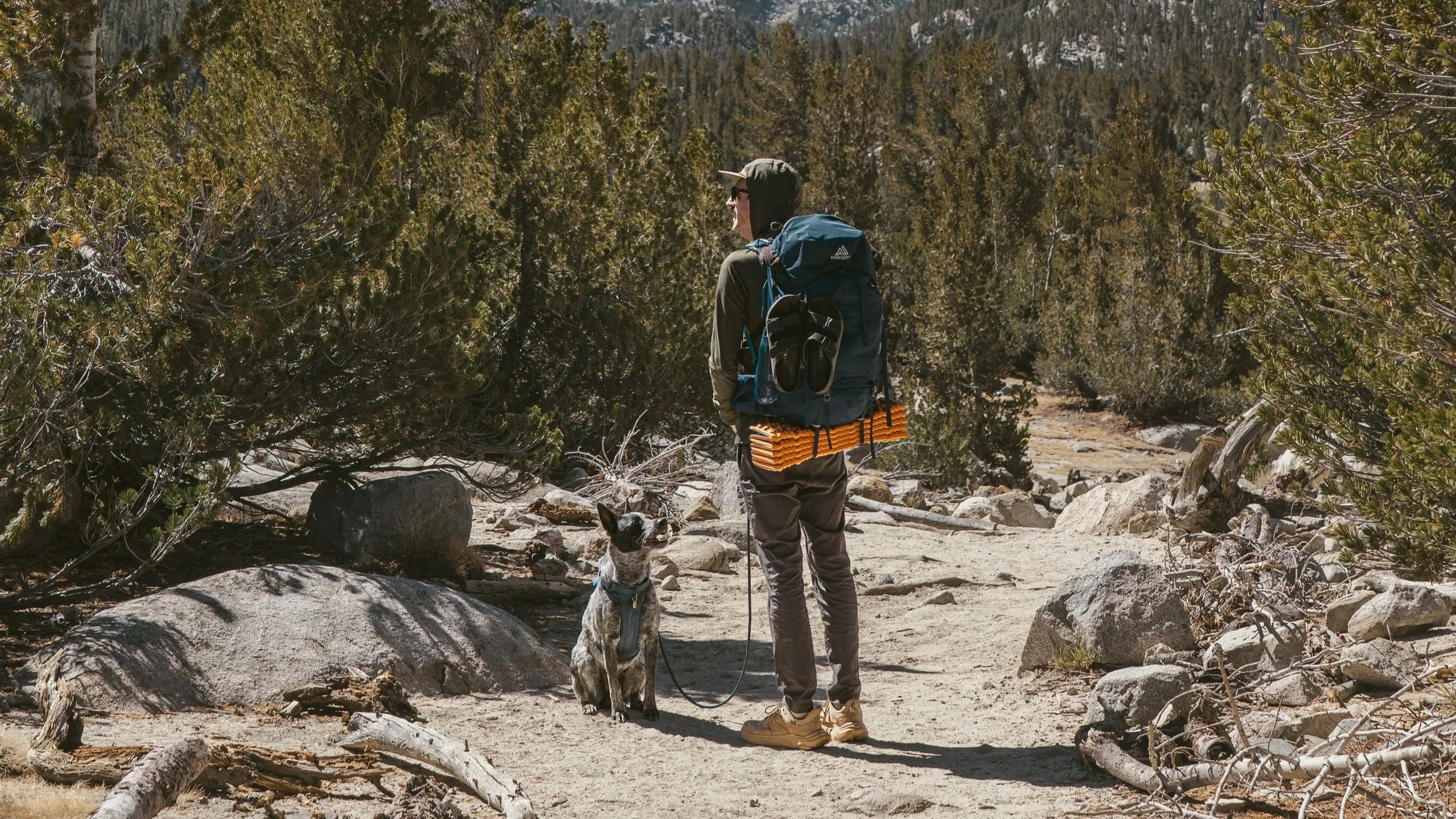
Now that I have a few backpacking trips with Shadow under my belt, I feel way more confident bringing him into the backcountry.
That does not mean I have it all perfectly figured out.
Backpacking with a dog is one of those things that sounds simple until you realize you’re basically packing for two: two sleep systems, two food plans, two comfort levels, and two very different opinions about what counts as “relaxing” at camp.
This is the dog backpacking gear list that’s working for us right now. I’m sure it will keep evolving as we get more trips together, but these are the things I currently pack when I’m backpacking with Shadow.
And if you backpack with your dog and have something you swear by, I’m always open to hearing what you’d add or change.
Note: Some of the links below may be affiliate links, which means I may earn a small commission if you purchase through them — at no extra cost to you. I only share gear I’d actually use, pack, or seriously consider for my own dog.
1. A Warm Blanket or Dog Sleeping Bag
The first thing I think about for Shadow is warmth at camp.
Even if it’s warm during the day, mountain nights can get cold quickly, especially once your dog stops moving and settles into camp. Shadow also has short fur, so I don’t assume he’ll be warm enough just because he’s a dog.
Right now, we bring a Rumpl Travel Puffy Blanket for him. It’s packable, cozy, and easy to use as a camp blanket inside the tent. You could also use a dog-specific sleeping bag like the Ruffwear Highlands Sleeping Bag or the Ruffwear Palisades Sleep Poncho if your dog needs more of a full sleep system.
For us, the goal is simple: give him something warm and familiar to curl up in at night.
2. A Sleeping Pad
A blanket helps with warmth, but I also like having some kind of pad between Shadow and the ground.
The ground can pull heat away from your dog just like it does from you, so a little insulation can make camp much more comfortable. We cut down a full-length closed-cell foam pad to fit Shadow’s size, which has worked really well so far.
A few options to consider:
You definitely don’t need anything fancy. A cut-down foam pad is a great budget-friendly option if you already have an old one lying around.
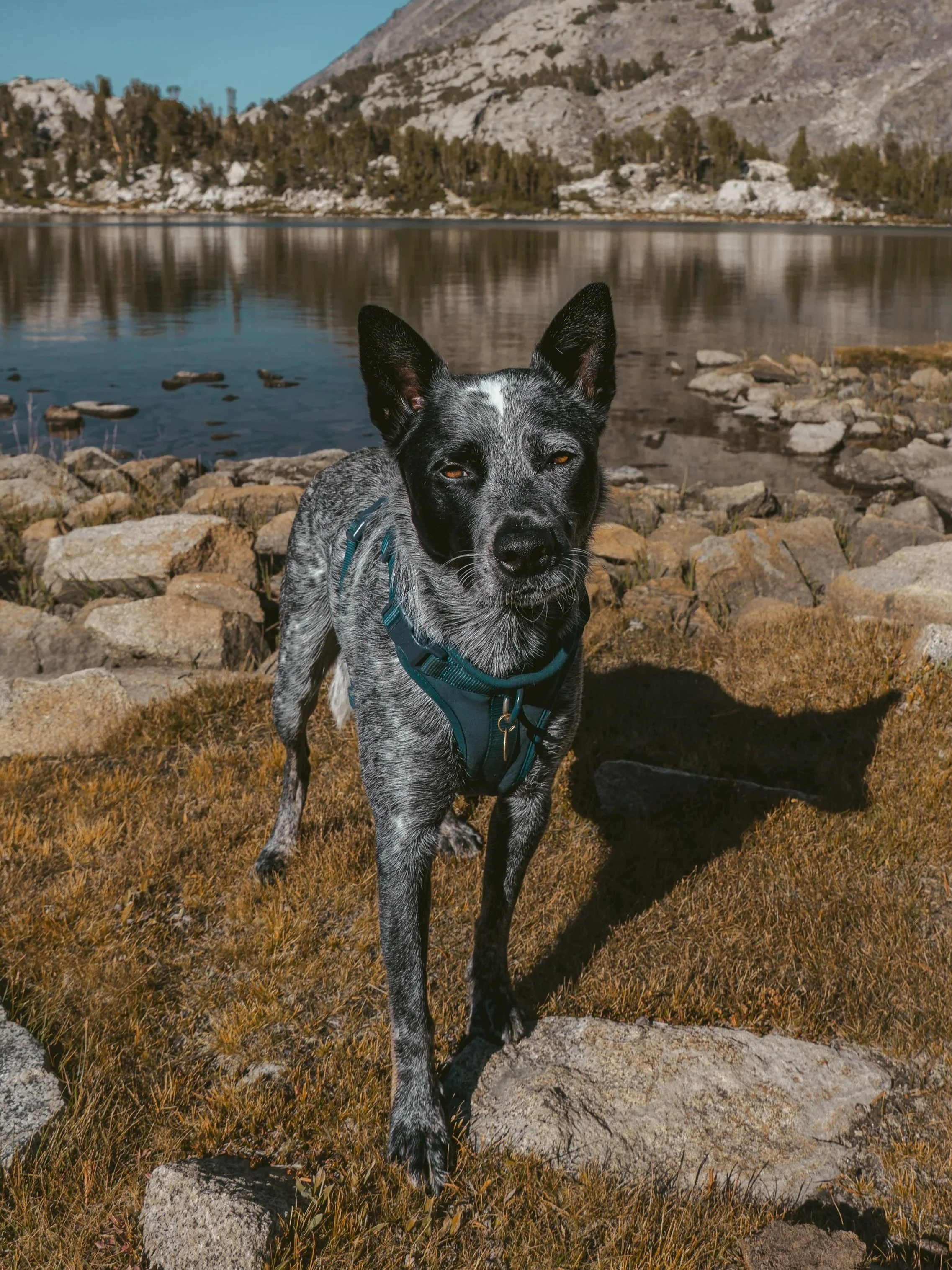
3. A Dog Jacket
I also bring a dog jacket for cold nights, early mornings, windy campsites, or shoulder-season trips.
This is especially helpful when we’re hanging around camp and Shadow isn’t generating as much body heat as he does while hiking. I like having an easy layer I can put on him while we make dinner, watch sunset, or get ready for bed.
Ruffwear has several solid outdoor dog jacket options depending on your climate and your dog’s coat type. For colder conditions, something like the Ruffwear Furness Dog Jacket is a warmer option. For milder trips, you may not need something quite that insulated.
The main thing is to think about your specific dog: their fur, size, age, tolerance for cold, and whether they tend to settle down or stay restless at camp.
4. Dry Food + Extra Calories
For backpacking, we stick with dry food because it’s easy to pack, portion, and serve without making a mess.
It also fits well in a bear canister, which matters when you’re backpacking in bear country. I usually portion Shadow’s meals ahead of time so I’m not trying to scoop kibble at camp while he’s staring at me like he hasn’t eaten in six years.
If you already feed your dog kibble, that may be the easiest thing to bring. If you use fresh or refrigerated food at home, you may want to look into shelf-stable options for backpacking, like:
your dog’s regular dry food, pre-portioned by meal
I also like bringing a few extra treats or small snacks. Dogs burn energy on trail too, especially with elevation gain, heat, cold, or longer mileage.
As always, don’t introduce a totally new food for the first time on a backpacking trip. Trail stomach problems are not the vibe.
5. A Collapsible Bowl
We usually bring one collapsible bowl and use it for both food and water.
You can absolutely bring two if you want to keep food and water separate, but I like keeping Shadow’s setup simple. One lightweight, packable bowl has been enough for us so far.
A few good options:
I also try to offer water often instead of waiting until he seems thirsty. Dogs can’t tell you they’re getting dehydrated, so I’d rather stop a little more often than realize too late that he hasn’t been drinking enough.
6. A Toy, Ball, or Chew
This might not sound like “essential” gear, but for us, bringing something familiar for Shadow has been really helpful.
Camp can be exciting, weird, boring, overstimulating, and confusing — sometimes all at once. A toy or chew gives him something to focus on while we set up the tent, make dinner, filter water, or just try to relax.
We usually bring either a ball or a chew. Shadow loves having something that feels familiar from home.
A few options:
a favorite toy your dog already knows and loves
Just make sure whatever you bring is something you’re comfortable managing at camp. I personally don’t want anything super messy, super loud (your camp neighbors prooobably won’t appreciate hearing a squeak toy all night…), or likely to disappear into the bushes forever.
7. Poop Bags + A Waste Plan
Always bring poop bags.
Even in the backcountry.
Even if you think you may be somewhere dog waste can be buried.
Dog waste rules vary by land manager and location, so always check the specific rules for where you’re going. In some backcountry areas, dog waste may be buried in a proper cathole if that is allowed or recommended by the land manager. In other places, you may need to pack it out.
Either way, you should always have bags on hand.
I like:
And one very important note: if you bag it, do not leave it on the trail “to grab later.” Pack it out.
No one wants to hike past a scenic overlook decorated with abandoned poop bags.
8. A Secure Leash + Harness
Even if your dog is great on trail, a secure leash and harness are non-negotiable for me.
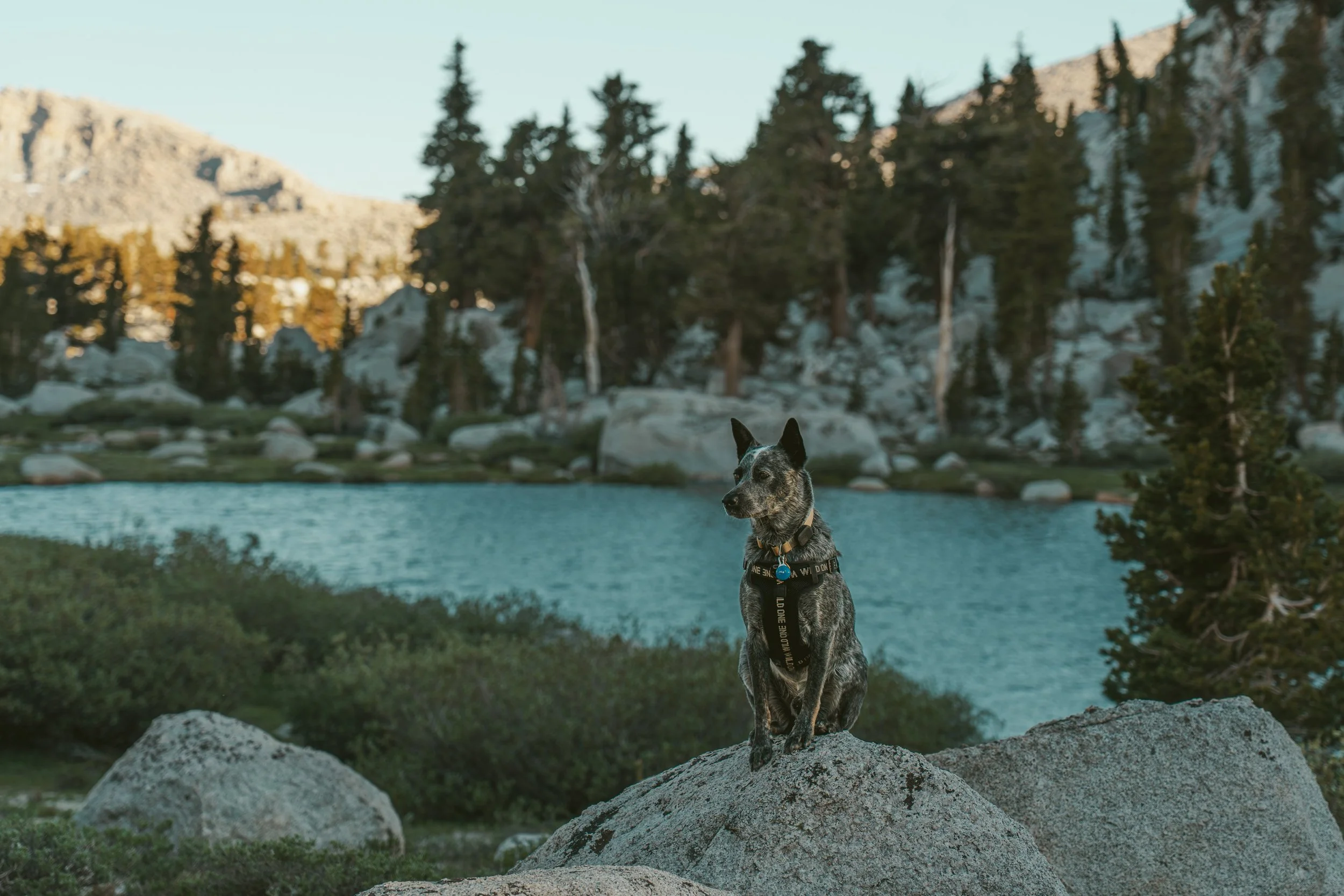
There are trail rules, wildlife encounters, other hikers, other dogs, camp situations, water crossings, and plenty of moments where I want Shadow close and controlled. A good harness also gives me more confidence if I need to grab him quickly or help him over something.
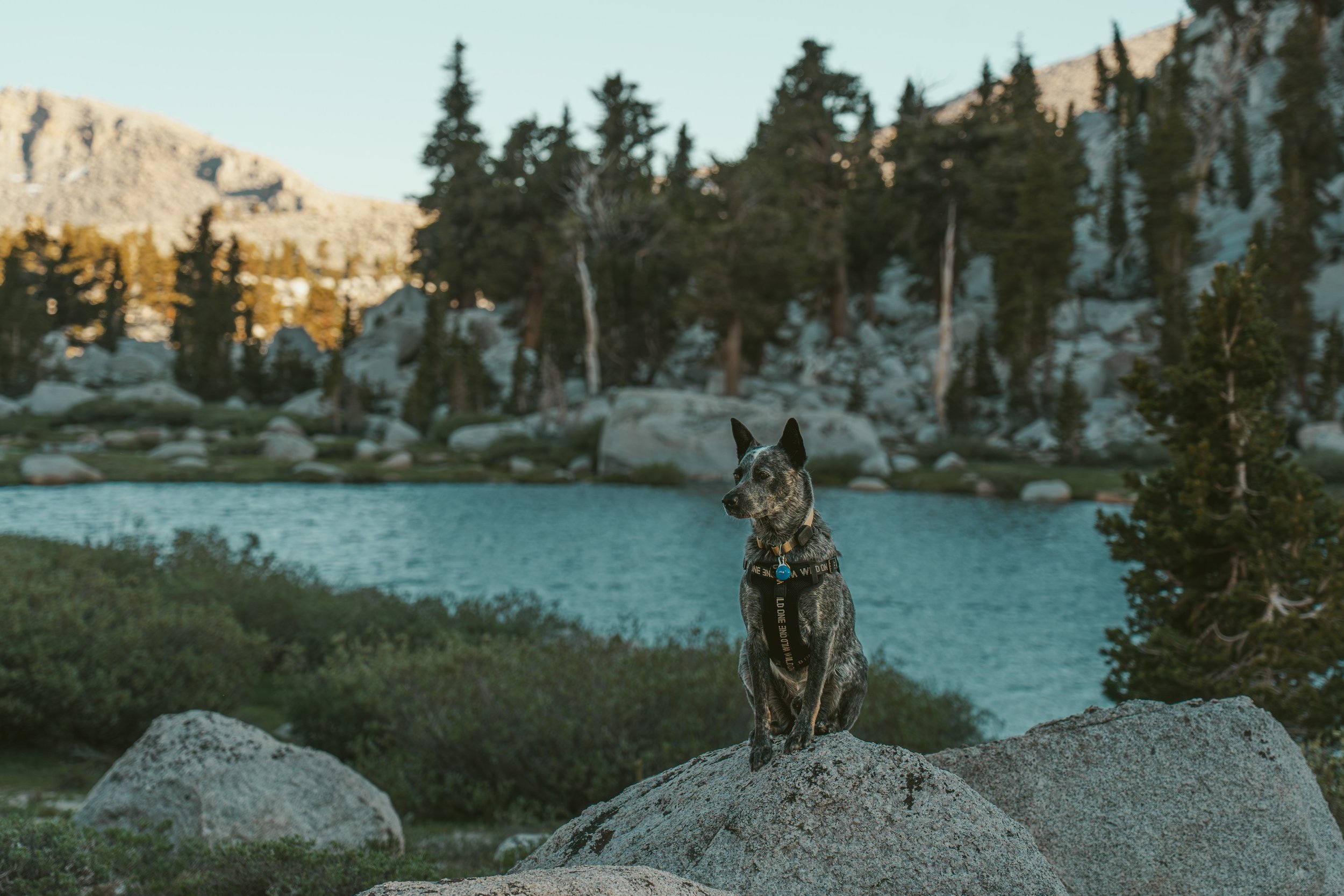
I’ve liked the Wild One harness and leash options, especially the convertible / hands-free leash style because it can be worn different ways. The hands-free option is nice when you’re using trekking poles, managing your pack, or trying to keep your hands available.
A few options to look at:
Wild One dog leashes (get 15% off with my link!)
The best setup is the one that fits your dog well and gives you reliable control without chafing or restricting movement.
9. Paw Balm + Booties
Paw care is one of those things I think depends a lot on your dog and the terrain.
For rough granite, hot sand, sharp rocks, snow, ice, or long mileage, paw balm or booties can be really helpful. Paw balm can add some protection and moisture, while booties are good to have as backup if your dog’s paws get irritated or injured.
Options to consider:
One tip: don’t make your dog wear booties for the first time on a backpacking trip. Practice at home or on short walks first, because many dogs need time to adjust.
10. Light-Up Collar or Clip Light
This is another small item that can make camp life so much easier.
A light-up collar or clip light helps you keep track of your dog after dark, especially during nighttime potty breaks, camp chores, or those moments when your dog blends perfectly into the shadows and suddenly becomes invisible.
A simple option is the Nite Ize SpotLit Rechargeable Collar Light, which clips onto a collar or harness.
This is especially helpful if your dog is dark-colored, likes to wander around camp, or you’re sharing a site with other people and want to know exactly where they are.
Optional: Dog Backpack
A dog backpack can be great for trail-fit dogs who are used to carrying a little weight.
It can help your dog carry some of their own gear, like food, a bowl, or poop bags. That said, I’d treat this as optional — not every dog needs a pack, and not every dog should carry one.
If you do use a dog pack, make sure it fits well, doesn’t rub, and that your dog has trained with it before the trip. Start light and build up gradually.
Options to consider:
For Shadow, I’m still figuring out how much I want him to carry versus how much I’d rather keep in my own pack.
Optional: Packable Dog Water Bottle
A collapsible bowl is usually enough for us, but a dog-specific water bottle can be convenient for quick breaks.
This is especially useful on hot trails, dry routes, road trips, or shorter hikes where you don’t want to fully unpack your bowl every time your dog needs water.
A few options:
a soft flask or bottle you already own
a dedicated lightweight water bottle for your dog
Just make sure you’re carrying enough water for both of you — and have a plan for filtering more if needed.
Bonus: Dog First Aid Basics
This isn’t the cutest thing to pack, but it is important.
At a minimum, I like having a few dog-specific first aid items or knowing what in my own first aid kit can also work for Shadow. Think: tweezers or a tick key, paw care, bandaging supplies, and anything your vet recommends for your specific dog.
You can also buy a premade dog first aid kit, like the Adventure Medical Kits Trail Dog First Aid Kit, and then customize from there.
And of course, know your dog. If your dog has specific health needs, allergies, medications, anxiety, heat sensitivity, or mobility concerns, talk to your vet before heading into the backcountry.
Final Thoughts
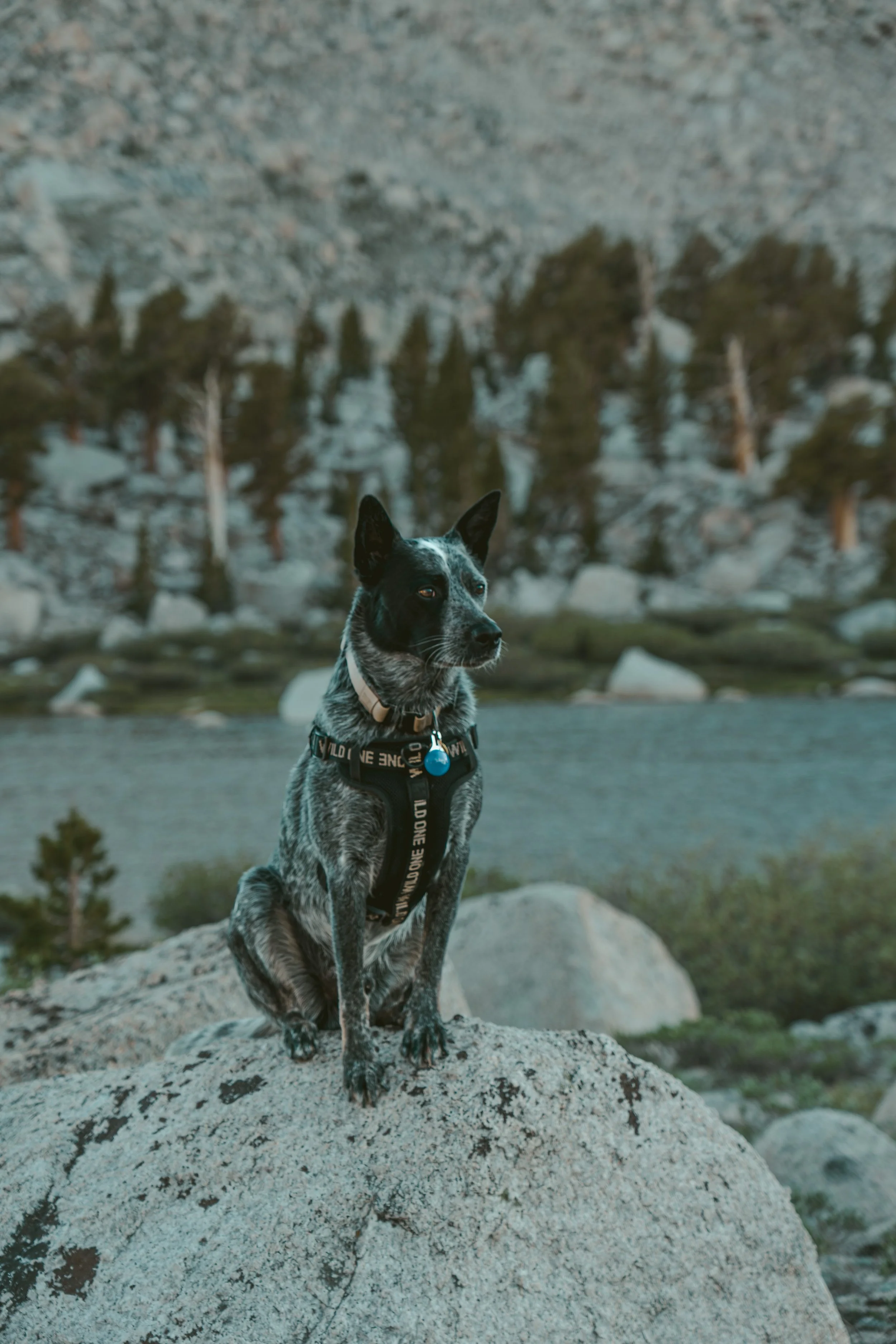
Backpacking with Shadow has made me rethink what “prepared” looks like.
It’s not just about whether I have my tent, quilt, stove, and snacks. It’s also about whether he has what he needs to stay warm, fed, hydrated, comfortable, safe, and calm enough at camp for both of us to enjoy the trip.
This is the dog backpacking gear list that’s working for us right now:
blanket or dog sleeping bag
sleeping pad
dog jacket
dry food
collapsible bowl
toy or chew
poop bags
leash and harness
optional paw balm or booties
optional clip light
optional dog backpack
optional dog water bottle
dog first aid basics
I’m sure this list will keep evolving the more trips we do together, but for now, this setup has made me feel much more confident bringing Shadow into the backcountry.
If you backpack with your dog, I’d love to know: what’s one thing you always pack that I should add to this list?